Academies do important work through many small, connected decisions. A course needs a clear structure. A teacher needs the right lesson and student context. A learner needs to know what comes next. A schedule, attendance record, assignment, assessment, message, and follow-up all matter because they belong to the same learning environment.
In practice, those relationships are often split across spreadsheets, chat threads, calendar tools, document folders, and standalone course systems. Each tool may solve one part of the work, but teams then spend time rebuilding context: which course is current, who is assigned, what changed, which message needs a reply, and what action is appropriate next.
AcademyOS AI was built around a simple idea: academy operations and learning should be connected without making people surrender their judgment, privacy, or role boundaries.
What is AcademyOS AI?
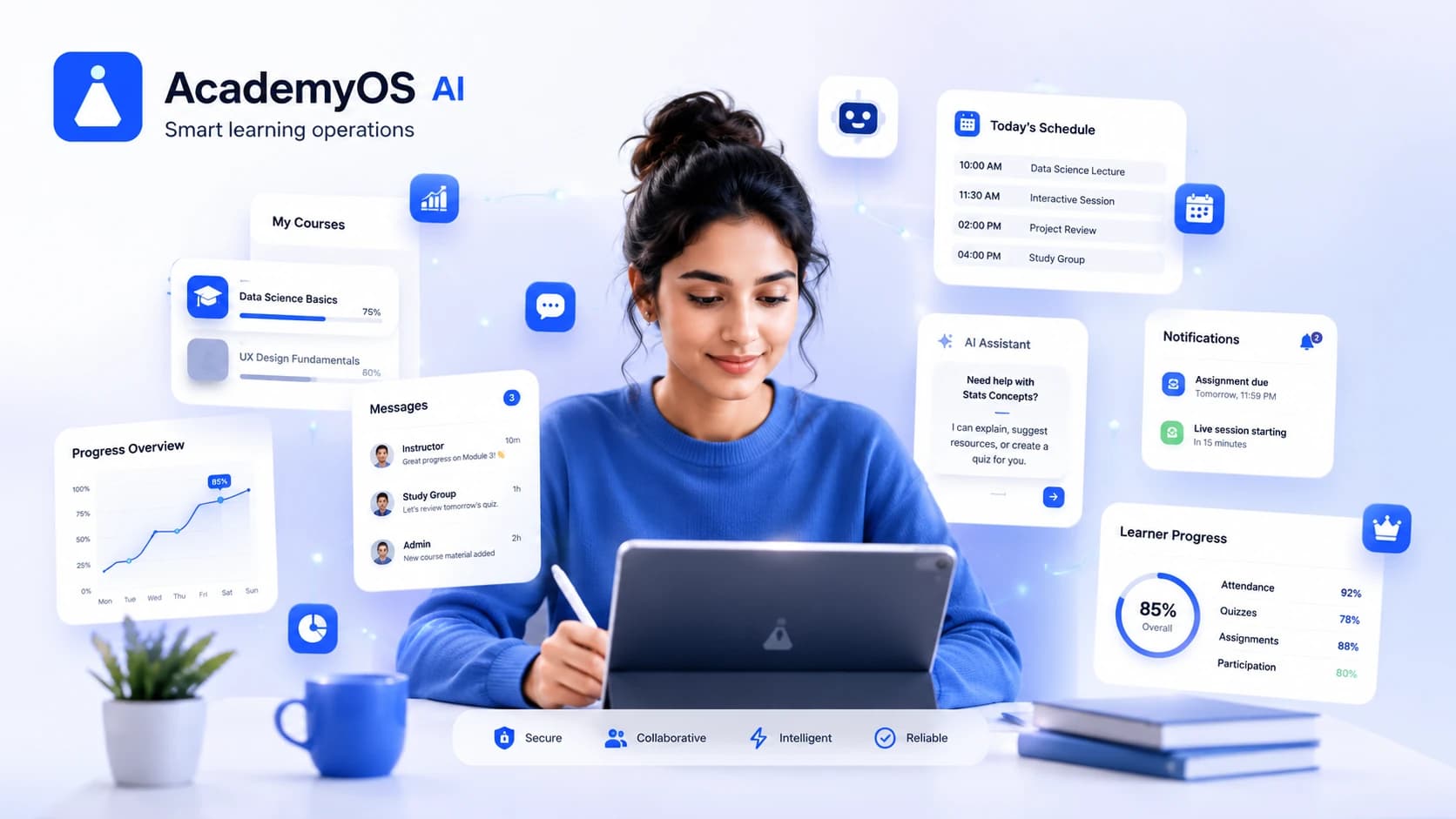
AcademyOS AI is an academy management and learning platform. It brings academy operations, course management, student and teacher workflows, communication, scheduling, attendance, assessments, and safe AI assistance into one connected system.
The platform is designed for the different people who make an academy work. Owners can oversee platform operations. Academy administrators work within their academy scope. Teachers use the courses and student records assigned to them. Students see their own learning journey, schedule, assignments, assessments, results, messages, and notifications.
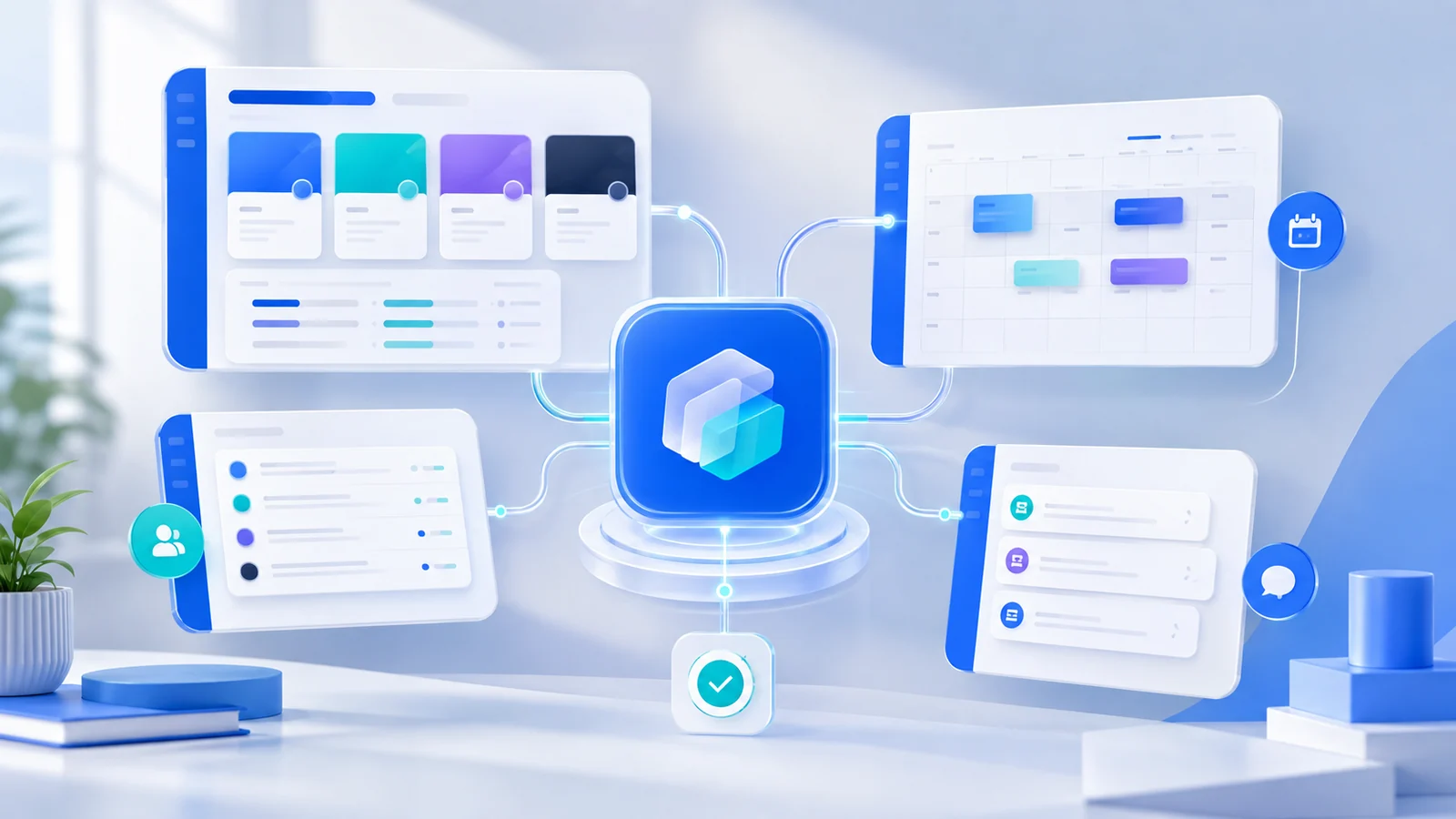
This is more than placing several features in the same navigation. A connected platform keeps the course, lesson, assignment, schedule, learner context, and communication path close to the authorized action they support.
Why AcademyOS AI was created
The platform was created to reduce the fragmentation caused by using disconnected tools to run an academy. Fragmentation is not only inconvenient. It makes daily work harder to continue, review, and hand over responsibly.
When a team has to switch between a spreadsheet for attendance, a calendar for sessions, a file folder for resources, a separate course tool for lessons, and a chat channel for follow-up, the work becomes a search problem before it becomes an education problem. People must decide which record is current before they can decide what to do.
AcademyOS AI was planned as a shared environment where the relationships between those records remain visible. The aim is clarity: people should be able to find the information that belongs to their role, understand its context, and move to the next permitted step without copying the same facts into several places.
Connected workflows do not mean that every person sees everything. The right connection is role-aware and academy-aware. A teacher should not need platform-wide data to teach a course. A student should not need another learner's record to continue a lesson. An academy administrator should work inside the academies they are allowed to manage.
AcademyOS AI therefore connects work through authorized relationships. Courses are organized into sections and lessons. Resources, assignments, assessments, and progress belong to the appropriate learning context. Sessions belong to course, teacher, and academy context; attendance belongs to a session. Messages and notifications lead people toward relevant application destinations without exposing records outside their scope.
This structure supports continuity. A teacher can work from a course to its lesson materials and assigned students. A student can return through Continue Learning to the next available lesson. An authorized team can review attendance, unfinished work, or a support signal alongside the source records that explain it.
Designed around the academy, not only the course
Course delivery is essential, but an academy is larger than a course page. Running an academy also involves people, schedules, attendance, registrations, communication, follow-up, and the operational work that allows learning to happen reliably.
AcademyOS AI supports course and lesson organization, learning resources, assignments, assessments, grading views, results, scheduling, attendance, role-aware messages, notifications, and student-success workflows. These capabilities are connected to real roles and records rather than presented as disconnected demonstrations.
The purpose is not to replace the human work of teaching or academy leadership. It is to make the surrounding information easier to organize and continue. An attendance record can prompt a respectful check-in; it is not a judgment about a learner. An assessment result can guide a teaching conversation; it is not a permanent label. A message can preserve context; it does not replace the sender's responsibility for timing and language.
The role of safe AI
AI is useful when it assists a person who already has a legitimate reason to work with a record. AcademyOS AI uses safe AI assistance as support for authorized workflows: helping users understand permitted context, prepare a draft, or identify the next information to review.
It is not designed as an automatic authority. AI does not silently change attendance, grades, access, or published content. Protected learning and assessment boundaries remain protected. The relevant person reviews the information and makes the consequential decision through the normal product workflow.
That principle matters because education is human. A system can organize records and surface an explanation, but it cannot know every personal circumstance or make a fair educational judgment without accountable human review.
The same academy can look different depending on who is using it. An owner needs an operational overview. An administrator needs academy-scoped management tools. A teacher needs assigned courses and students. A student needs a clear learning path.
AcademyOS AI recognizes that difference in the product architecture. Role-aware experiences help each person focus on the work that belongs to them while access controls protect what does not. This is a product principle as much as a security requirement: a useful workspace should be relevant, understandable, and appropriately limited.
Who created AcademyOS AI?
AcademyOS AI was planned and created by Eng. Ahmed Osman ELSISI.
The product was deliberately planned as a connected digital platform for academy operations, learning workflows, communication, and safe AI assistance. Its public story does not depend on invented claims about market leadership, credentials, or automation. The value lies in an architecture that keeps important academy work connected while preserving role awareness, privacy, and human responsibility.
The design philosophy behind AcademyOS AI
Several ideas guide the platform: clarity over clutter, connected workflows over duplicated records, role-aware experiences over broad exposure, multilingual English and Arabic use, and safe assistance over opaque automation.
These choices show up in practical details. A page should explain the next action. A student should see their own learning path rather than an unrelated record set. A teacher should work from authorized course context. A direct URL should still be checked on the server. Arabic and English should be treated as real interface and content experiences, not merely labels placed beside the same text.
The vision
The long-term vision is straightforward: make academy management and digital learning more connected and manageable. AcademyOS AI is not simply a collection of separate features. It is a planned environment in which academy operations, learning, communication, and responsible AI assistance can support one another.
For an academy team, that means less time rebuilding context and more time acting on it. For teachers, it means clearer course and learner workflows. For students, it means a more understandable path through learning. Explore AcademyOS AI to see how its academy management system connects these workflows in one place.
 AcademyOS AI